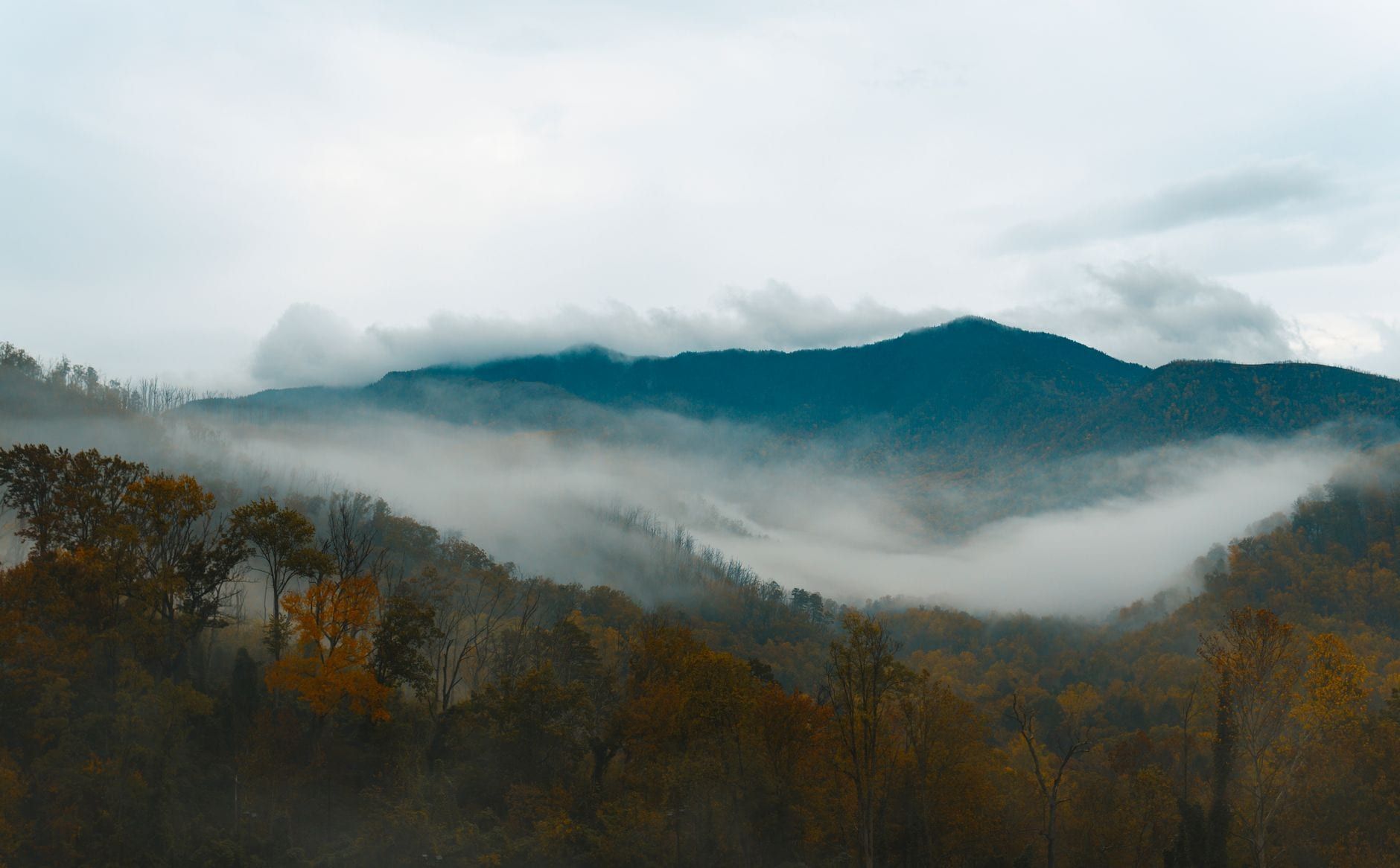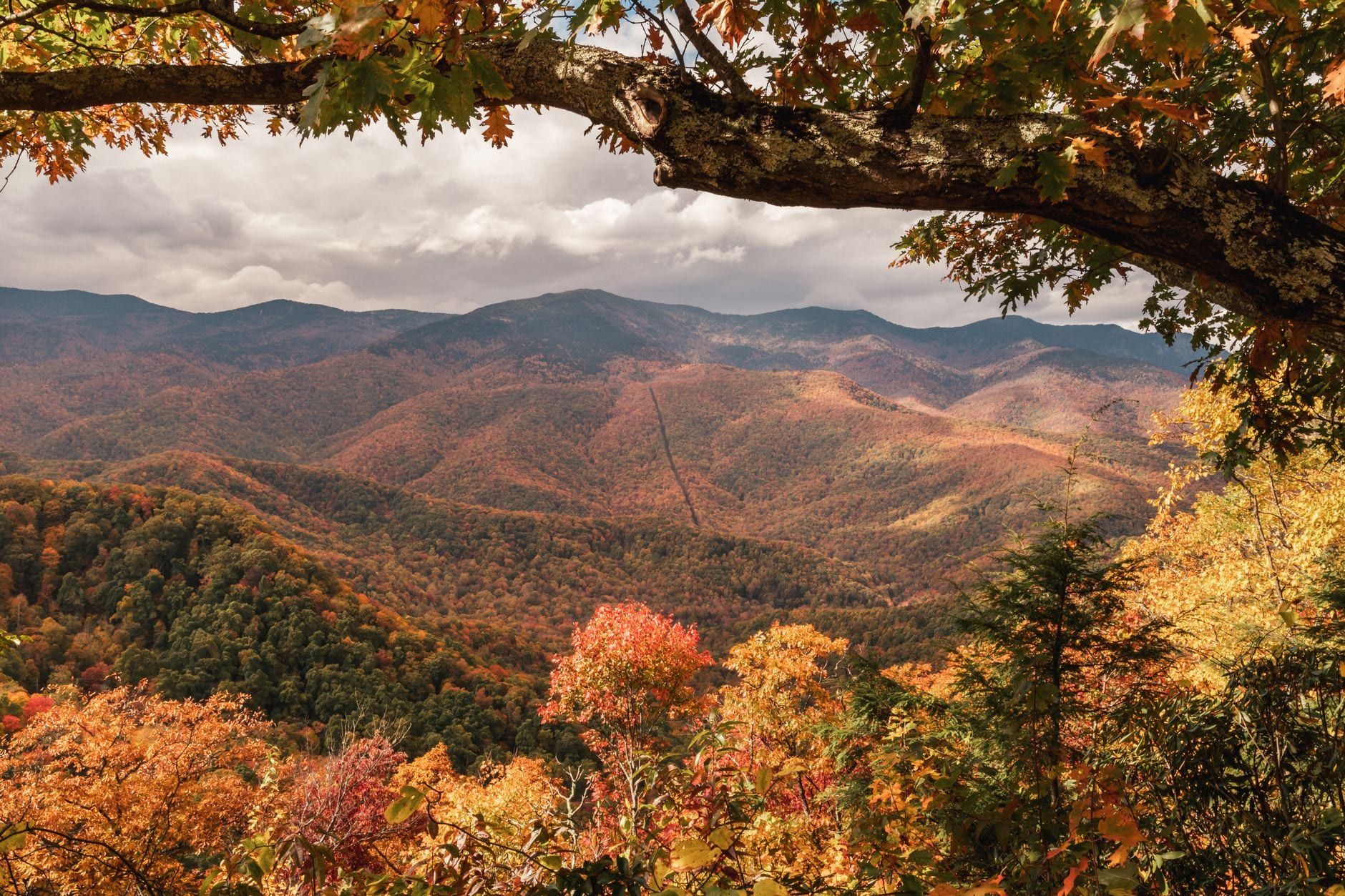
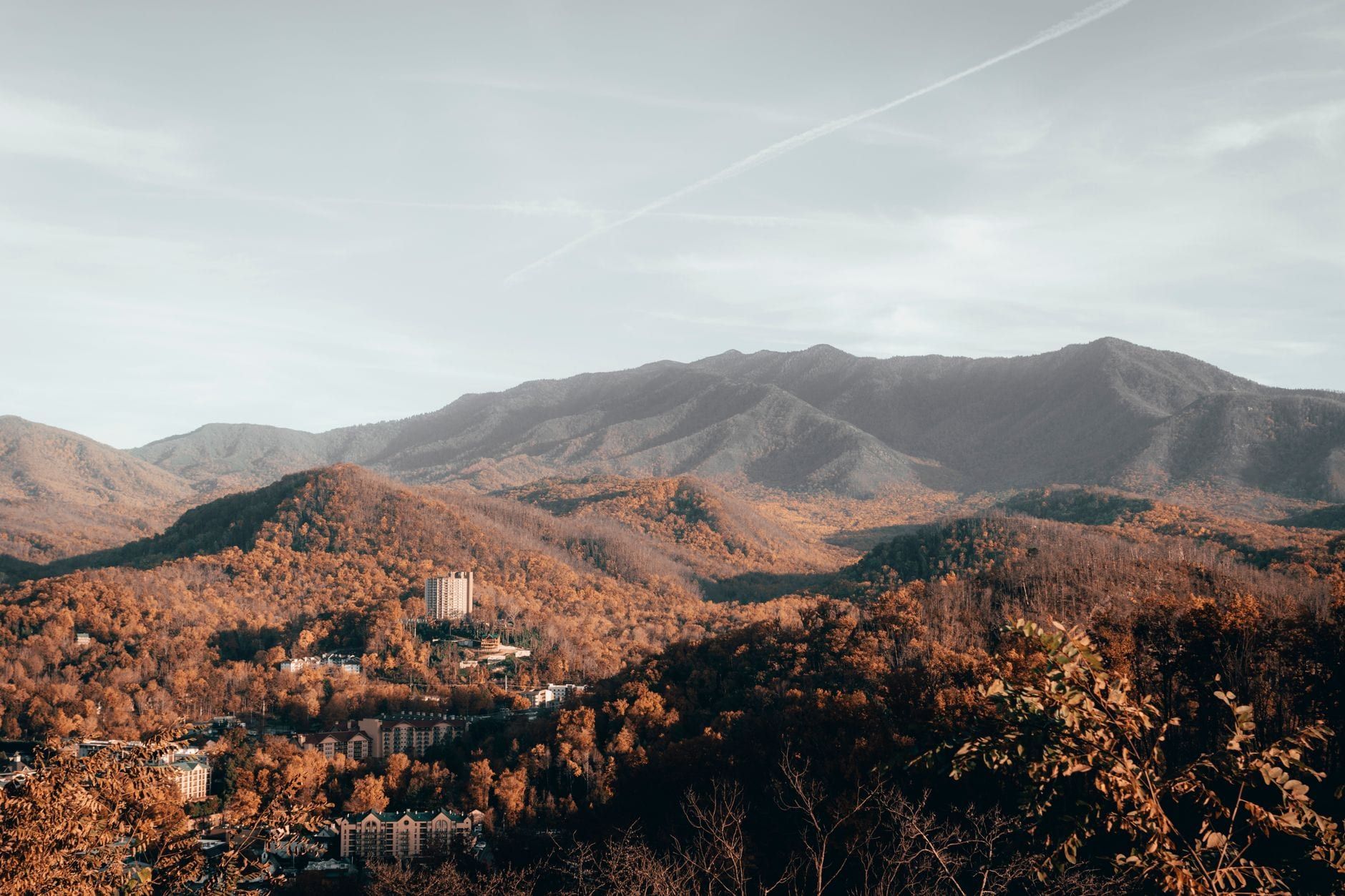
Color moves down the Great Smoky Mountains one elevation band at a time, starting above 4,000 feet in mid-September and not finishing in the valleys until early November. That six-week crawl is what makes fall trip timing here harder than picking one peak weekend — the mountain you're standing on matters as much as the date on the calendar.
Great Smoky Mountains National Park pulls in more than 12 million visits a year, more than any other national park in the country, and October is its single busiest month. This guide breaks down when the colors actually peak by elevation, where to drive and hike for the best of it, and how to dodge the worst of the crowds doing it.
When Fall Colors Peak in the Smokies (and Why Timing Is Tricky)
Color starts at the top. Above 4,000 feet, yellow birch, American beech, mountain maple, hobblebush, and pin cherry begin turning as early as mid-September, weeks before Gatlinburg needs a jacket.
The main event follows below 4,000 feet, where sugar maple, scarlet oak, sweetgum, red maple, yellow poplar, and hickories turn between mid-October and early November — the deep reds and oranges most people picture when they think of the Smokies in fall. Over 100 native tree species contribute to the display across a park that ranges from 875 feet at its lowest point to 6,643 feet at Kuwohi, so on any October day you can drive from bare branches to full color in under an hour.
No one can name an exact peak date months out. A wet September, an early frost, or one windy afternoon can shift the show by a week in either direction. Check the park's official fall color page and its foliage webcams the week you travel rather than a date you saw in a blog post from last year — our month-by-month guide tracks the broader seasonal patterns if you're still choosing between fall and spring.
October is the busiest month of the year in the park, full stop. If elbow room matters more to you than maximum color, aim for the weeks just before or after it.
A Month-by-Month Breakdown: September, October, and November
September is the quiet window. High-elevation color starts appearing in the last two weeks of the month, days in Gatlinburg still climb into the 70s and low 80s, and crowds are the lightest of the three fall months.
October is peak season by every measure. Color cascades from ridgeline to valley floor as the month goes on, daytime temperatures settle into the 40s to 70s, and the park logs its highest visitation of the year — the last three weeks are the single busiest stretch on the calendar.
November is the shoulder season locals quietly prefer. Color holds on at the lower elevations even as nights at Clingmans Dome dip toward freezing, and the crowds that clogged Cades Cove in October have mostly thinned out by the second week.
| Month | Fall Color | Gatlinburg Temps (°F) | Crowd Level |
|---|---|---|---|
| September | High-elevation color just starting; valleys still green | 55–83 | Lightest of the three months |
| October | Peak color spreads to mid and low elevations; busiest month of the year | 43–73 | Heaviest, especially the last three weeks |
| November | Color lingers at low elevations before fading by month's end | 33–61 | Thins out noticeably after the first week |
Pick September for mild weather and a preview of color with room to move. Pick October for the widest spread of color and accept the traffic that comes with it. Pick early November for lower-elevation reds and oranges with a fraction of the cars on Cades Cove Loop Road.
Best Scenic Drives for Fall Color
Five routes cover the range of what a car alone can show you, from a high-elevation crossing to a valley loop thick with wildlife. Pick two or three rather than trying to drive all of them in a single day — October traffic makes that a slog.
Newfound Gap Road
This 33-mile drive between Gatlinburg, Tennessee, and Cherokee, North Carolina, is the classic low-to-high fall route, climbing from the valley floor to the Newfound Gap Overlook at 5,046 feet, where Franklin Roosevelt dedicated the park in 1940 and the Appalachian Trail crosses the road. Drive it in early October and you can watch the color change with the elevation in real time — green at the bottom, gold and red by the top.
Cades Cove Loop Road
This 11-mile one-way loop through a broad valley ringed by mountains takes two to four hours door to door once you factor in wildlife stops and the historic homesteads, three churches, and John P. Cable Mill along the way. It's also the single most congested road in the park come October, so budget the extra time or come at first light.
Roaring Fork Motor Nature Trail
Just outside Gatlinburg, this narrow 5.5-mile one-way loop threads old-growth forest, roadside cascades, and preserved log cabins, ending at the aptly named Place of a Thousand Drips. It's slow going by design — pull off often — and large RVs and trailers aren't permitted on it.
Foothills Parkway
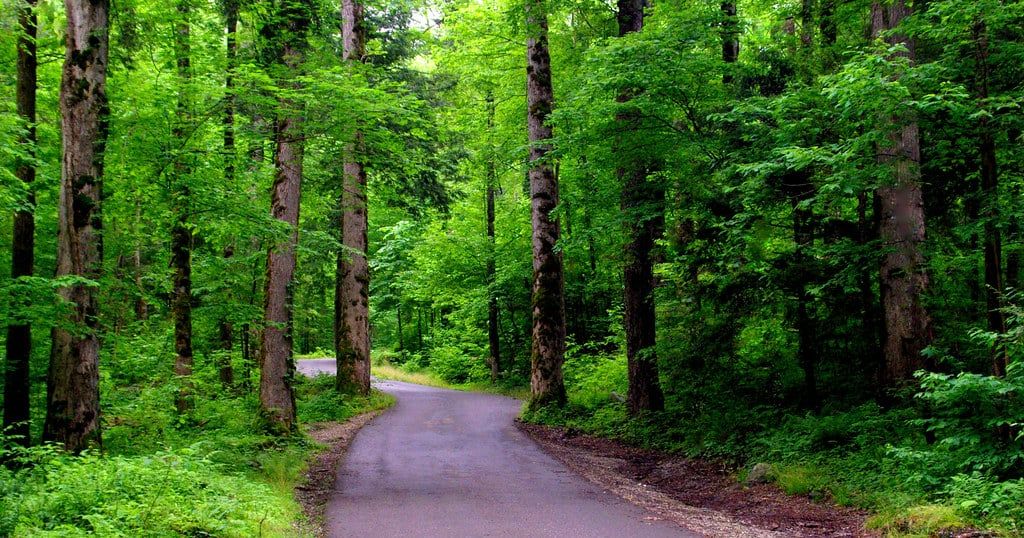
This 33-mile drive along the park's western edge trades crowds for panorama, with sweeping views across the Smokies and the Tennessee Valley and none of the bumper-to-bumper traffic of Cades Cove. Locals treat it as the fallback route once Newfound Gap Road backs up.
Blue Ridge Parkway and Balsam Mountain Road
On the North Carolina side, the Blue Ridge Parkway connects directly to the park near Cherokee, adding overlooks and an easy detour to Asheville if you've got an extra day. Heintooga Ridge Road and Balsam Mountain Road, both lightly travelled, run through high-elevation forest that colors earlier than the valley drives — worth it once you've done Newfound Gap and want the road to yourself.
Best Hikes and Overlooks for Fall Foliage
Match your trail to the calendar, not just the trailhead. High-elevation hikes peak first, low-elevation ones peak last, and the gap between them can run six weeks.
Easy Trails for Families
The Oconaluftee River Trail is a flat, mostly paved 2-mile round trip from the Mountain Farm Museum near Cherokee — no real elevation gain, and elk sometimes graze the fields at either end around dusk. The Gatlinburg Trail, also flat, is one of only two park trails that allow leashed dogs and follows the Little Pigeon River out of Sugarlands Visitor Center. Andrews Bald, a 3.5-mile round trip from the Forney Ridge Trailhead near Kuwohi, is a longer stretch but a manageable one, ending at a grassy summit meadow that catches high-elevation color in late September.
Moderate Hikes
Alum Cave Trail is a 5-mile round trip off Newfound Gap Road, passing Inspiration Point and Alum Cave Bluff and gaining enough elevation to catch color before the valley does. Porters Creek and Jakes Creek, quieter options near Greenbrier and Elkmont, trade the views for creekside forest and old homestead sites — good picks when the Alum Cave lot is already full by 9am.
Strenuous Summit Hikes
Chimney Tops, Mount LeConte, Charlies Bunion, and Mount Cammerer all trade a hard climb for exposed rock and a view over ridge after ridge of color. Mount LeConte is the biggest undertaking of the four — its rise from a base of just 1,292 feet to a 6,593-foot summit is the tallest base-to-summit climb in the eastern United States — and rewards overnight guests at LeConte Lodge, the only non-camping lodging inside the park, reachable on foot only. Start before 8am if you want any of these summits to yourself.
Drive-Up Overlooks for Non-Hikers
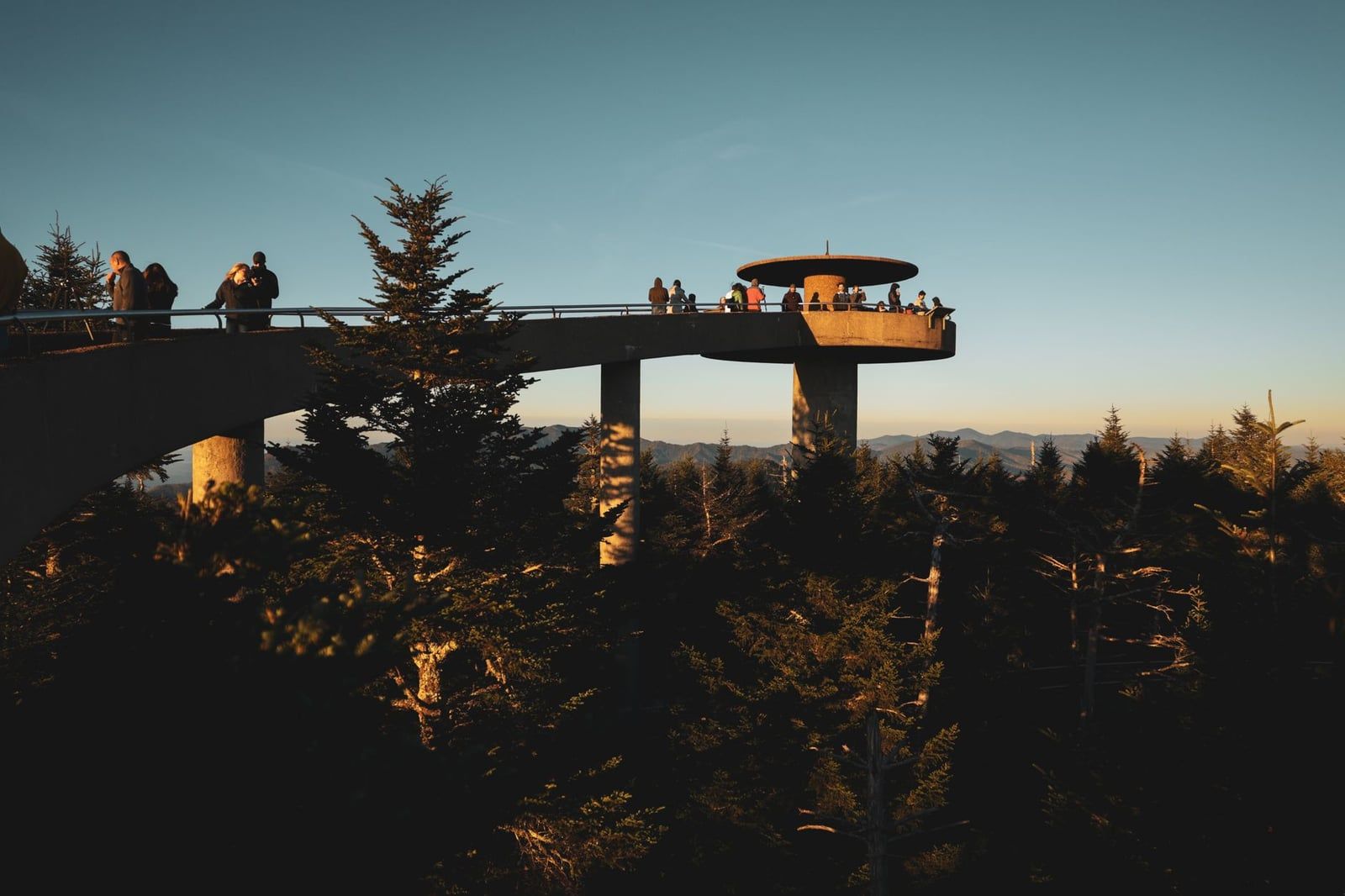
Kuwohi, formerly known as Clingmans Dome, is the highest point in the park at 6,643 feet, reached by a steep half-mile paved walk from the parking lot to an observation tower with views that stretch over 100 miles on a clear day. Morton Overlook, near the top of Newfound Gap Road on the Tennessee side, is the classic late-afternoon stop over the Chimney Tops ridgeline. The Oconaluftee Valley Overlook, close to the North Carolina entrance, frames Newfound Gap itself and needs no walking beyond the parking pull-off.
If you're building a trip around trails, hike high — Kuwohi, Andrews Bald, Chimney Tops — in the last two weeks of September and first week of October, then shift to low-elevation trails like the Oconaluftee River Trail through late October and into November. Our trail guide by difficulty breaks down distances and elevation gain in more detail, and guided hikes are worth booking if you want an experienced read on where the color is that week instead of guessing.
Fall Wildlife: The Elk Rut and What Else to Spot
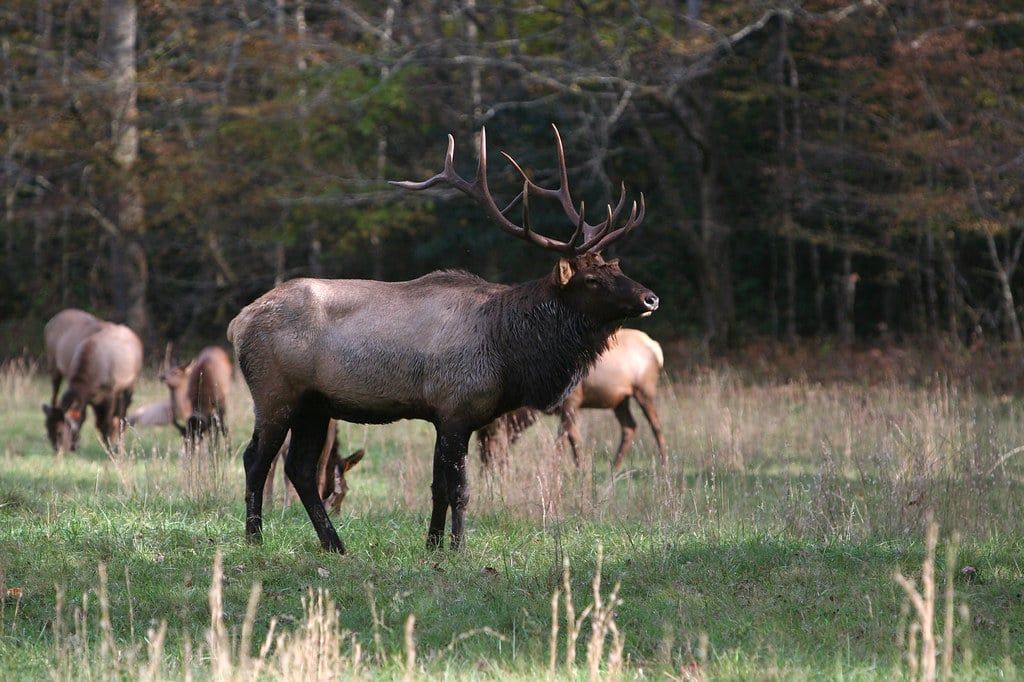
Fall is elk breeding season — the rut — when bull elk bugle to challenge rivals and gather harems of up to 20 cows. It's the loudest, most visible wildlife show of the year in the park.
Cataloochee Valley, a secluded valley on the North Carolina side reached by a slow, winding gravel road, is the best place in the park to watch it. Go at dawn or dusk, when elk move into the open fields, and expect to share the meadow with a few dozen quiet onlookers rather than the crowds at Cades Cove.
Cades Cove itself is still the better bet for deer, black bears, and wild turkeys, especially in the early morning before the loop road fills with cars.
Federal rules require staying at least 50 yards from any bear or elk — roughly half a football field — and feeding wildlife is illegal everywhere in the park. Store food in a locked vehicle or bear-proof locker, even at a roadside pull-off.
Beating the Crowds: Practical Fall Visit Planning
Most visitors arrive between 10am and 11am, which is exactly when Cades Cove Loop Road and Newfound Gap Road grind to a crawl. Get there before 8am or after 4pm and you'll find parking at trailheads that are full by mid-morning.
When Cades Cove and Newfound Gap are jammed, head to Oconaluftee, Cataloochee, Balsam Mountain, Deep Creek, or Rich Mountain Road instead — same forest, same color, a fraction of the traffic.
Every vehicle parked longer than 15 minutes anywhere in the park needs a parking tag: $5 for a day, $15 for a week, $40 for the year. There's still no entrance fee, but buy the tag online or at a machine at Sugarlands, Oconaluftee, or the Cades Cove Orientation Shelter before you go — full details are on our hours and fees page, and a valid tag doesn't guarantee an actual spot once a trailhead lot fills.
Seasonal shuttle operators run from Gatlinburg and Cherokee to trailheads like Alum Cave, Laurel Falls, Chimney Tops, Trillium Gap, Rainbow Falls, and Clingmans Dome, sidestepping the parking problem entirely. Book lodging and anything guided — a backcountry jeep route or an evening moonshine tasting tour — well before October; cabins in Gatlinburg and Pigeon Forge sell out months ahead for fall weekends.
What to Pack and Wear
Pack layers, always. Temperatures swing 10 to 20 degrees Fahrenheit between the valley floor and the high peaks, and an October morning at Newfound Gap can start with frost even as Gatlinburg sits in the 60s below.
Bring a waterproof shell, too. The high country logs 6 to 9 rainy days most fall months, and a clear morning can turn to a cold drizzle by early afternoon with almost no warning at elevation.
Sturdy, broken-in footwear matters more than it sounds like it should — wet leaves over rock and root are slicker than they look, especially on trails like Alum Cave or Chimney Tops. Carry water even on a cool day; dry mountain air and elevation gain dehydrate you faster than the temperature suggests.
Other Fall Things to Do: Festivals, Fishing, Biking and More
Gatlinburg's Smoky Mountain Harvest Festival runs from early September to early November, filling the town with pumpkins, live music, and craft vendors during the same weeks the park is at its best — a solid rainy-day fallback when you need a break from the trails.
Fishing gets better as the crowds and bugs thin out. The park's more than 2,100 miles of streams run lower and clearer in fall, and cooler water means fewer insects and steadier trout.
Cades Cove Loop Road, mostly flat across its 11 miles, is an easy ride once the afternoon traffic clears — bring your own bike, since there's no year-round rental point in the cove.
Away from the trails, Gatlinburg's SkyBridge and aerial tramway put you above the color without a single step of elevation gain, a solid option if you're short on time or the forecast turns. Our complete things-to-do guide covers the rest of the park's activities season by season.
Where to Stay for a Fall Trip
Book early. October weekend cabins and hotels in Gatlinburg and Pigeon Forge routinely sell out months ahead, and a last-minute search in September usually means driving in from farther away or paying a premium for what's left.
Gatlinburg puts you two miles from Sugarlands Visitor Center and walking distance from restaurants and shops — the pick if you want to be in the park at first light without a long drive. Pigeon Forge, about ten miles further north, trades some of that proximity for Dollywood, dinner shows, and outlet malls, a better fit for families splitting time between the park and other attractions. On quieter roads, Townsend, Bryson City, and Cherokee sit closer to Cades Cove, Cataloochee, and Oconaluftee respectively, and skip the Tennessee gateway towns' traffic altogether. If you're mapping out more than a weekend, our day-by-day itinerary guide lines up lodging with drive times.
Frequently asked questions
When is peak fall foliage in the Great Smoky Mountains?
Higher elevations above 4,000 feet typically peak from mid-September to early October, while lower and mid elevations peak from mid-October to early November. Exact dates shift by a week or more depending on that year's rain and frost.
What is the best month to visit the Smokies for fall colors?
October has the widest spread of color across elevations but is also the single busiest month in the park. Late September and early November give you strong color with noticeably lighter traffic.
Where is the best place to see fall colors in the Smoky Mountains?
Newfound Gap Road, Cades Cove, Kuwohi (Clingmans Dome), and Roaring Fork Motor Nature Trail are the standout spots. Add Cataloochee Valley if you want elk bugling in the background of your foliage photos.
How crowded is the Smokies in October?
October is the busiest month of the year in the park, and the last three weeks are the peak of it. Cades Cove Loop Road and Newfound Gap Road see the worst congestion; arrive before 8am to beat it.
What should I wear or pack for a fall trip to the Smokies?
Layer up for a 10-20°F swing between the valley floor and the high peaks, add a waterproof shell since the high country sees 6-9 rain days most fall months, and wear broken-in boots for slick, leaf-covered trails.
Is fall a good time to see wildlife in the Smokies?
Yes. Fall is elk rutting season, with bugling bulls and harems of up to 20 cows best seen at Cataloochee Valley, while Cades Cove stays reliable for deer, bears, and turkeys.
Do I need a parking pass to visit the Smokies in the fall?
Yes. Any vehicle parked over 15 minutes anywhere in the park needs a parking tag: $5 a day, $15 a week, or $40 a year. There's still no entrance fee, and the tag is separate from any interagency park pass.
How do I avoid crowds in the Smokies during fall foliage season?
Arrive before 8am or after 4pm, since most visitors show up between 10 and 11am. Use shuttle services to popular trailheads and try quieter areas like Oconaluftee, Cataloochee, Balsam Mountain, or Deep Creek instead of Cades Cove and Newfound Gap.