About All Tours Jeep ToursHiking ToursHelicopter ToursMoonshine Tours Directions Hours & Fees Guides
Find Tours 
Great Smoky Mountains National Park is a 522,427-acre forested wilderness straddling the North Carolina and Tennessee border. It protects the largest remaining block of old-growth forest in the eastern United States and draws over 12 million visitors annually.
Great Smoky Mountains National Park covers 522,427 acres of the southern Appalachian Mountains, divided almost evenly between North Carolina and Tennessee. The boundary spans Swain and Haywood counties in North Carolina, alongside Blount, Cocke, and Sevier counties in Tennessee. An unbroken mountain crest bisects the park from northeast to southwest. It forms the state line for more than 36 miles. The landscape consists of steep forested ridges, deep river valleys, and 2,100 miles of mountain streams. It holds the largest block of never-logged old-growth forest remaining in the eastern United States. More than 12 million people visit each year, making it the most heavily trafficked national park in the country.
Visitors drive the 11-mile Cades Cove Loop Road to spot black bears and white-tailed deer foraging in a broad valley ringed by peaks. On summer Wednesdays, the National Park Service closes this loop to cars, opening the pavement entirely to bicycles and pedestrians. Hikers climb the steep half-mile paved path to Kuwohi, standing at 6,643 feet to look out over seven states on clear days. At the 5,046-foot Newfound Gap, you can stand on the state line and watch Appalachian Trail thru-hikers resting before continuing their 2,000-mile trek. The park preserves over 90 historic structures, including 19th-century log cabins, cantilever barns, and working gristmills.
There is no public transportation into the park from major cities. Most visitors fly into McGhee Tyson Airport in Knoxville, roughly 45 miles from the Gatlinburg entrance, and rent a car. You drive south on US-129 or take the Foothills Parkway to reach the Sugarlands Visitor Center. From the North Carolina side, drivers take Interstate 40 to US-19 through Maggie Valley to reach the Oconaluftee entrance. Commercial shuttle operators run seasonal service from March through October, dropping hikers at popular trailheads. The park loans adult- and child-sized GRIT Freedom Chairs—off-road wheelchairs that handle dirt and gravel—free of charge for visitors with mobility needs. You pick them up on a first-come, first-served basis from November to April at the main visitor centers, or reserve them up to 30 days in advance during the busy summer months.
Heavy rain frequently closes secondary dirt roads like Parsons Branch. Traffic on Newfound Gap Road stalls to a crawl during the October fall foliage season and summer weekends. Cell service drops to zero miles before you reach the trailheads. Download offline maps before leaving gateway towns like Gatlinburg or Cherokee. Families with young children should walk the flat, stroller-friendly Oconaluftee River Trail rather than attempting steep, rocky paths.
Humans have occupied the Great Smoky Mountains for at least 9,000 years. Paleo-Indians hunted in the river valleys, and the Cherokee eventually established permanent towns along the waterways. The descendants of these Cherokee communities live today on the Qualla Boundary, directly adjacent to the park's Oconaluftee entrance in North Carolina. European settlers arrived in the early 1800s, clearing small patches of valley land to build log cabins, churches, and gristmills.
Industrial logging operations moved into the mountains in the 1880s. Timber companies laid narrow-gauge railroad tracks up steep ravines to extract massive tulip trees, hemlocks, and chestnuts. By the early 20th century, logging companies had stripped roughly 300,000 acres of timber. The clear-cutting caused massive soil erosion and devastating fires that burned through the remaining slash. By the 1920s, logging operations threatened to clear-cut the entire range. Local citizens in Knoxville and Asheville formed groups to advocate for a national park to stop the deforestation.
The federal government did not own the land. The land acquisition process proved incredibly complex. Unlike western national parks carved out of existing federal land, the Smokies required purchasing more than 6,000 individual tracts of private property. Some families willingly sold their farms and moved. Others fought the eminent domain proceedings in court or accepted lifetime leases that allowed them to stay in their cabins until they died. State legislatures in Tennessee and North Carolina appropriated funds, while local schoolchildren donated pennies to buy out the timber companies and private landowners. John D. Rockefeller Jr. provided a final $5 million donation to secure the remaining acreage. The states transferred the deeds to the federal government, and the park was officially established in 1934.
President Franklin D. Roosevelt formally dedicated the park on September 2, 1940, standing at Newfound Gap. During the 1930s, the Civilian Conservation Corps supplied the manual labor to build the park's infrastructure. Young men in CCC camps constructed stone bridges, cut trails, and built the fire towers that still stand today. The park manages the dual mandate of protecting its recovering forests while handling record-breaking crowds. The National Park Service instituted a parking tag requirement in 2023 to fund maintenance backlogs. Buy the $5 daily tag online before you arrive, as trailhead kiosks frequently run out of printed passes.
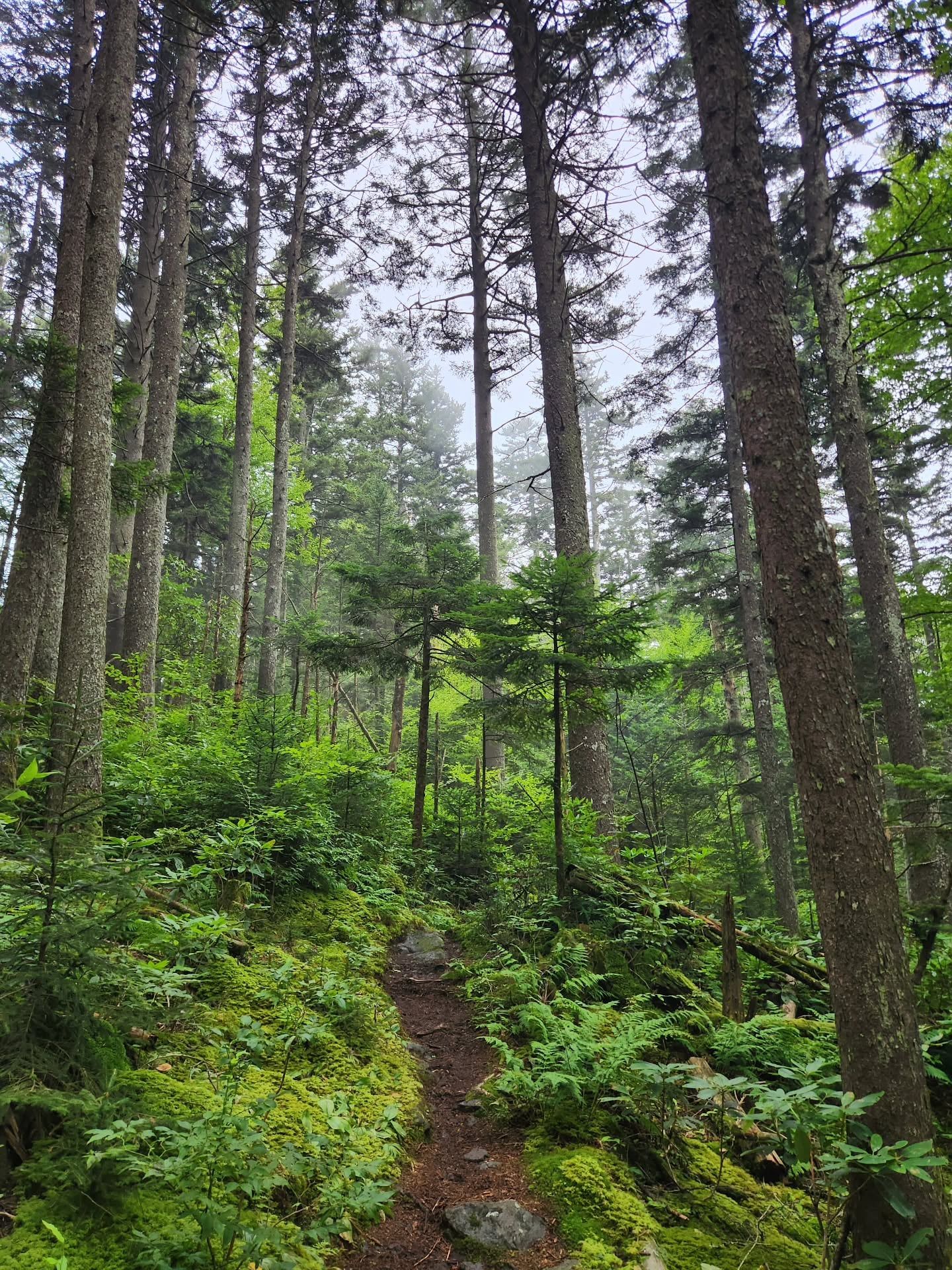
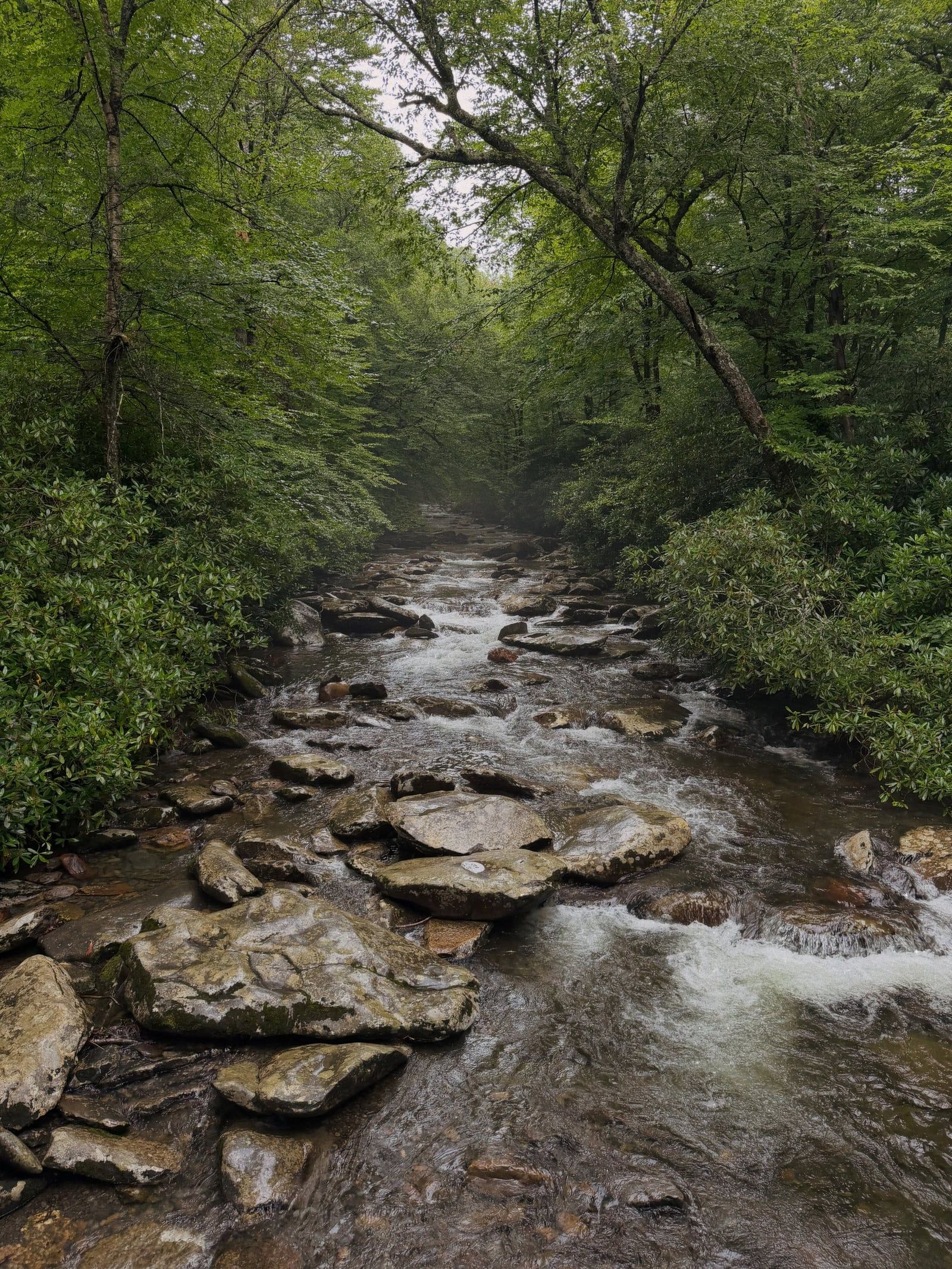
The Great Smoky Mountains belong to the Appalachian mountain system, formed 200 to 300 million years ago by tectonic plate collisions. Ice Age glaciers never reached this far south. The lack of glaciation allowed plant and animal species to migrate along the slopes and survive, resulting in extreme biodiversity. The park contains over 19,000 documented species. Scientists estimate another 80,000 to 100,000 remain uncatalogued. Elevations range from 875 feet at the mouth of Abrams Creek to 6,643 feet at Kuwohi. Sixteen peaks exceed 6,000 feet. Mount Le Conte rises 5,301 feet from its base in Gatlinburg to its 6,593-foot summit, making it the tallest mountain from base to peak in the eastern United States. The summit hosts LeConte Lodge, the only non-camping lodging in the park, reachable solely on foot. Eight major forest types cover 96 percent of the park land. The high country receives over 85 inches of rain annually, feeding 2,100 miles of streams and rivers.
Black bears populate every elevation level. Visitors frequently spot them foraging for berries and acorns along the Roaring Fork Motor Nature Trail or in the open fields of Cades Cove. Federal regulations prohibit approaching within 50 yards of a bear. Rangers issue citations and make arrests for violations. Elk graze at dawn and dusk in the fields surrounding the Oconaluftee Visitor Center. Temperatures drop steadily as you drive up the mountain roads. The air at the 6,643-foot Kuwohi summit is typically 10 to 20 degrees Fahrenheit colder than the 875-foot lowlands near Abrams Creek. Snow and ice frequently close Kuwohi Road and Newfound Gap Road between December and February. Pack layered clothing and sturdy footwear regardless of the season.
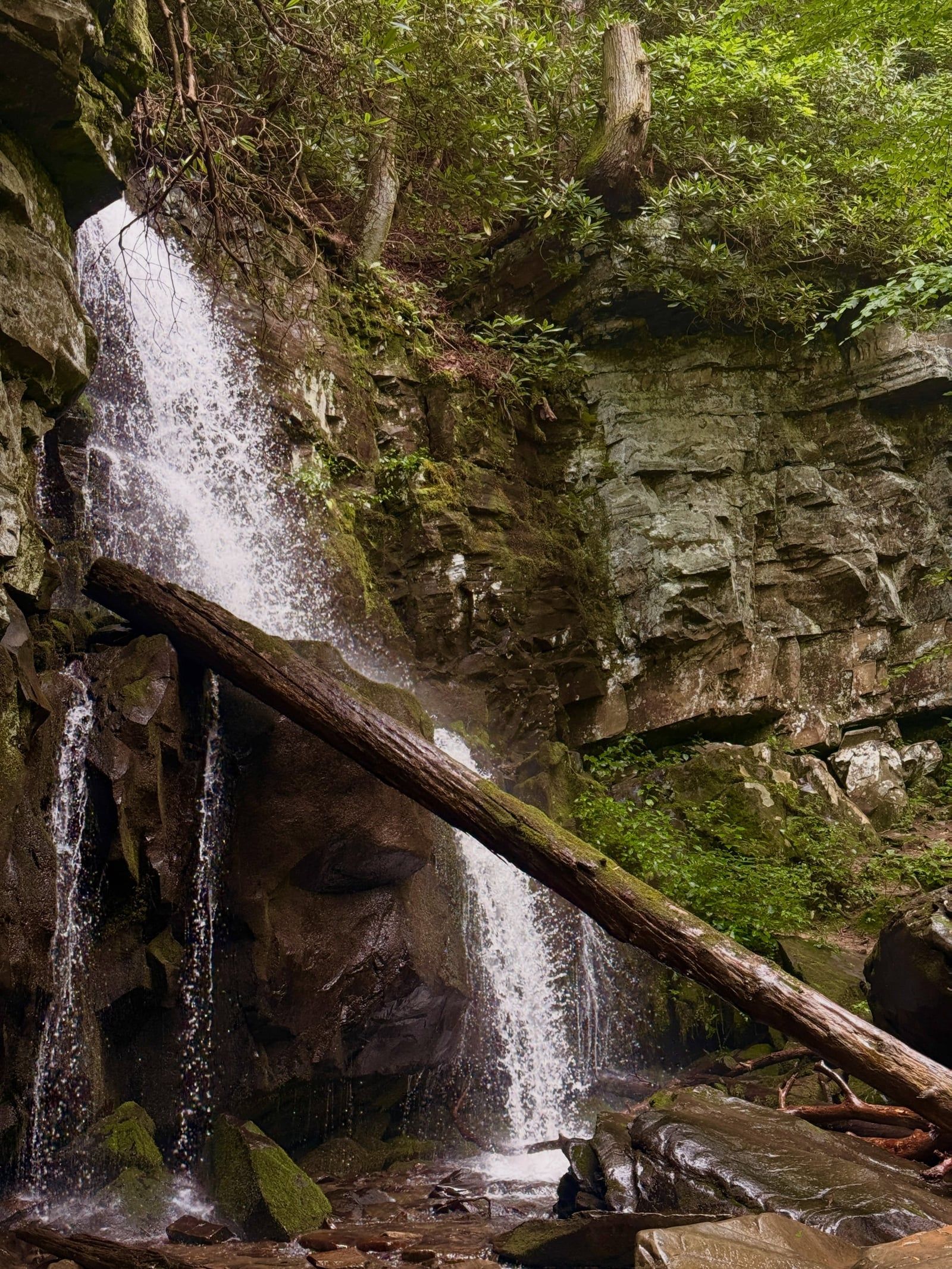
The park strictly enforces rules to protect this ecosystem. Drones are completely banned from launching, landing, or operating anywhere within the park boundaries. Pets are prohibited on all but two of the park's 800 miles of trails—the Gatlinburg Trail and the Oconaluftee River Trail—and must remain on a six-foot leash. Open alcohol containers are illegal except in designated picnic areas and campgrounds. Synchronous fireflies (Photinus carolinus) mate near the Elkmont campground for two weeks every June. Thousands of male fireflies flash their bioluminescent abdomens in unison to attract females. The National Park Service runs a lottery system for vehicle passes to view the display. Enter the lottery in April if you want to see the fireflies. Skip the crowded Laurel Falls trail and hike the 5.4-mile roundtrip to Abrams Falls for a wider, more powerful water drop.
The Great Smoky Mountains hold deep cultural weight for the Eastern Band of Cherokee Indians. The Cherokee call the mountains Shaconage, meaning "place of the blue smoke." Kuwohi, the highest peak, translates to "mulberry place." It served as a refuge for Cherokee people evading the forced removal of the Trail of Tears in 1838. The mountain remains a sacred site for medicine men seeking guidance. The U.S. Board on Geographic Names officially restored the name Kuwohi in 2024, replacing the previous designation of Clingmans Dome.
The park preserves the physical remnants of Southern Appalachian settler culture. Over 90 historic structures remain standing in their original locations or relocated to open-air museums within the park. The Mountain Farm Museum at Oconaluftee displays a chestnut log house, a springhouse, and a working blacksmith shop. In Cades Cove, three 19th-century churches sit along the loop road. Their adjacent cemeteries contain the graves of the valley's original white settlers. The park's architecture reflects the isolation of early mountain life. Settlers built cantilever barns with massive overhanging second stories to protect livestock and equipment from the heavy rainfall, a design rarely seen outside the southern Appalachians. You can inspect these structures closely along the Roaring Fork Motor Nature Trail, a narrow, winding 5.5-mile one-way loop through old-growth forest. Large trailers, RVs, and buses are banned on this road due to the tight curves.
The Spring Wildflower Pilgrimage brings thousands of visitors to Gatlinburg each April. Botanists lead guided walks to identify trillium and lady's slipper orchids blooming across the forest floor. The timing of the blooms depends entirely on the elevation gradient, starting in the valleys in March and reaching the high ridges by May. Drowning is a leading cause of death in the park. Swift currents, cold water, and slick rocks make the rivers dangerous. Do not swim in the streams, and never climb on the waterfalls. For a safe cultural experience, walk the grounds of the John P. Cable Mill in Cades Cove when the water wheel operates from mid-March to late November.
The park charges no entrance fee because the state of Tennessee stipulated the main road must remain free when transferring the land.
Mount Le Conte is the tallest mountain from base to peak in the eastern United States, rising 5,301 feet from Gatlinburg.
The park contains over 19,000 documented species of plants and animals, with scientists estimating tens of thousands more remain undiscovered.
Thousands of male fireflies flash their lights in unison for two weeks every June near the Elkmont campground.
The park preserves the largest block of never-logged old-growth forest remaining in the eastern United States.
Elk were reintroduced to the park in 2001 after being hunted to local extinction 150 years earlier.
Local schoolchildren donated pennies to help raise the funds needed to buy the park land from timber companies in the 1920s.
No, there is no entrance fee. However, all vehicles parked longer than 15 minutes must display a parking tag costing $5 per day, $15 per week, or $40 annually.
The park is open 24 hours a day, 365 days a year. The only exception is Cades Cove Loop Road, which opens at dawn and closes at dusk daily.
There is no public transportation into the park from major cities. Visitors must rent a car at Knoxville or Asheville airports, or hire commercial shuttles based in gateway towns like Gatlinburg or Cherokee.
Yes, it consistently ranks as the most visited national park in the country. It drew more than 12 million recreational visits in 2024, roughly twice the visitation of the next busiest park.
Yes, roughly 1,900 black bears live within the park boundaries. Federal law requires visitors to stay at least 50 yards away from bears at all times.
Kuwohi, formerly known as Clingmans Dome, is the highest point at 6,643 feet. You can drive near the summit and walk a steep, half-mile paved trail to an observation tower.
Pets are only allowed on the Gatlinburg Trail and the Oconaluftee River Trail, and they must remain on a six-foot leash. They are banned on all other 800 miles of park trails.
Peak fall foliage usually occurs in mid-to-late October. The colors change earlier at higher elevations and move down into the valleys as the month progresses.
No. Launching, landing, or operating any unmanned aircraft is completely prohibited throughout the park. Rangers issue citations for drone use.
The park strongly discourages swimming due to swift currents, cold water, and slick rocks. Drowning is a leading cause of death in the park, and climbing on waterfalls frequently causes serious injuries.
Browse verified tours with free cancellation and instant confirmation.
Find Tours